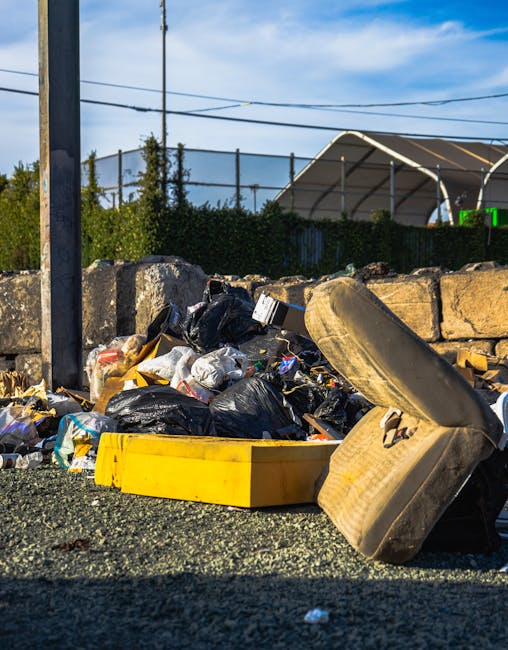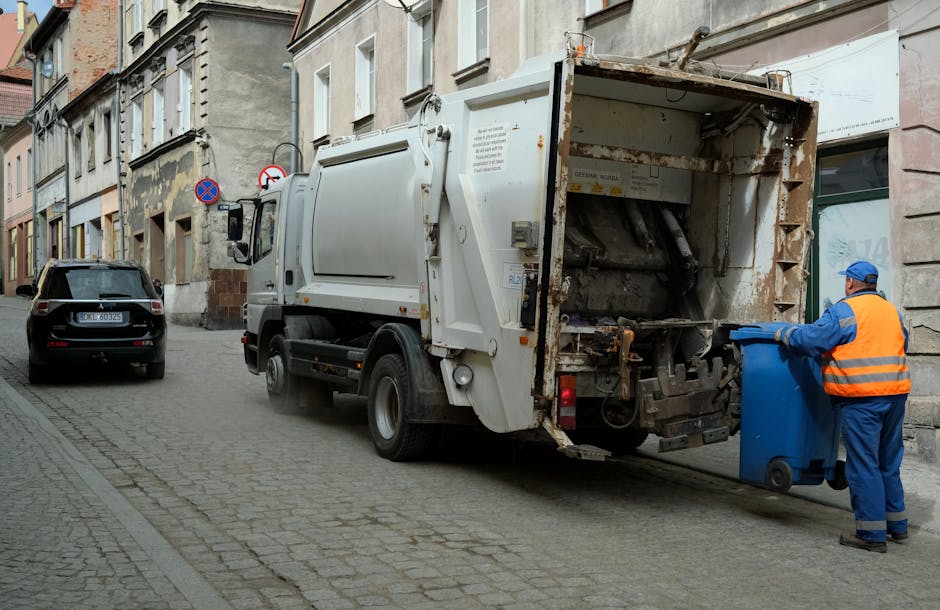
Addiscombe Road rubbish removal guide CR0: a practical, local approach to clearing waste without the hassle
If you live, work, or manage property along Addiscombe Road, rubbish has a funny way of building up exactly when you have the least time to deal with it. A few bags after a clear-out. Old furniture that has lingered in the hallway for weeks. Builder's offcuts stacked by the gate. Suddenly the space feels tighter, messier, and more stressful than it should. This Addiscombe Road rubbish removal guide CR0 is here to make the process feel manageable, not overwhelming. You'll find a plain-English explanation of how rubbish removal works, what to watch for, how to choose the right option, and how to avoid the common headaches that cost people time and money.
It's written for real-life situations too. The "quick tidy before visitors arrive" kind. The "landlord needs the flat cleared by Friday" kind. The "I can't get this sofa down the stairs on my own" kind. Let's face it, rubbish removal is rarely glamorous. But done properly, it is one of those jobs that instantly changes how a space feels.
- Why Addiscombe Road rubbish removal guide CR0 matters
- How it works
- Key benefits and practical advantages
- Who this is for and when it makes sense
- Step-by-step guidance
- Expert tips for better results
- Common mistakes to avoid
- Tools, resources and recommendations
- Law, compliance, standards and best practice
- Options, methods, and comparison table
- Case study or real-world example
- Practical checklist
- Conclusion
- Frequently asked questions
Table of Contents
- Why Addiscombe Road rubbish removal guide CR0 Matters
- How Addiscombe Road rubbish removal guide CR0 Works
- Key Benefits and Practical Advantages
- Who This Is For and When It Makes Sense
- Step-by-Step Guidance
- Expert Tips for Better Results
- Common Mistakes to Avoid
- Tools, Resources and Recommendations
- Law, Compliance, Standards, or Best Practice
- Options, Methods, or Comparison Table
- Case Study or Real-World Example
- Practical Checklist
- Conclusion
- Frequently Asked Questions
Why Addiscombe Road rubbish removal guide CR0 Matters
Addiscombe Road sits in a busy part of Croydon, so rubbish removal tends to be about more than simply getting things taken away. Access can be awkward, parking may be limited, and waste left outside too long can quickly become an eyesore. If you are dealing with bulky items, mixed rubbish, or a room that has filled up with clutter, the way you remove waste matters just as much as the waste itself.
There's also a practical side many people overlook. Rubbish removed properly can free up usable space, reduce trip hazards, and help you prepare a property for sale, let, decorating, or handover. That is especially useful in flats, terraced homes, converted buildings, and busy business premises where every square metre counts. If the job is handled badly, though, you can end up with missed collections, access issues, or waste that cannot legally be taken with the rest.
For many households, this is where a broader service such as waste removal or more focused clearance help becomes relevant. The right choice depends on the type and volume of waste, how fast it needs to go, and whether any awkward items are involved. Simple enough in theory. In practice, people often underestimate the lifting, sorting, and disposal side until they are standing beside a pile of awkward things in the doorway.
Expert summary: The best rubbish removal plan is the one that matches your access, waste type, and timeline. Don't choose the biggest-sounding option; choose the one that will actually fit the job.
How Addiscombe Road rubbish removal guide CR0 Works
At a practical level, rubbish removal usually follows a simple pattern: identify the waste, decide how much of it there is, choose a removal method, and arrange collection. The detail sits underneath that. A single bulky sofa is very different from a mixed pile of renovation debris, and mixed waste is very different from a loft full of old household items.
A typical local removal job starts with a description or quote request. You explain what needs clearing, where the waste is located, and whether there are access limitations such as narrow stairs, no lift, permit-only parking, or rear-garden access only. That information matters because it affects labour, vehicle access, loading time, and disposal planning. If the waste is hidden in a top-floor flat, a garage, or a loft, it can take longer than the pile suggests.
If you are working with an experienced clearance provider, they should be able to advise whether the job is better suited to flat clearance, house clearance, loft clearance, or something more general. That distinction matters. A lot. The wrong service choice is one of the easiest ways to create delays.
Once booked, the crew will normally arrive with the equipment needed to move items safely, load them, and transport them for sorting and disposal. If there are specialist items such as fridges, mattresses, or sofas, it helps to flag them early so the team can plan for the right handling. You do not want to discover, at the kerbside, that an item needs a different disposal route.
Key Benefits and Practical Advantages
The biggest benefit of organised rubbish removal is obvious: your space gets cleared. But the real value goes further than that. A clean, empty room is easier to clean, easier to inspect, and easier to use. That sounds basic, but it changes the feel of a property almost immediately.
- Time saved: You avoid repeated trips to a tip or recycling point, which is a real bonus if you do not have a large vehicle.
- Less physical strain: Heavy or awkward rubbish is moved by people used to handling it, which reduces the risk of strain or accidents.
- Better property presentation: Useful for landlords, sellers, letting agents, and homeowners preparing for tradespeople.
- More predictable scheduling: A booked removal window is often easier than waiting around for a council collection or juggling several DIY trips.
- Sorting support: Good removal teams will separate reusable, recyclable, and non-recyclable waste where possible.
There is also something quietly reassuring about handing a messy task to someone who knows what they are doing. You can get on with the rest of your day. Make the tea. Deal with the emails. Chase the plumber. The rubbish disappears into the background, where it belongs.
For people clearing out old furniture or large household items, it is often worth looking at dedicated services like furniture clearance or furniture disposal rather than treating everything as general waste. The right route can make the process cleaner and more efficient, and sometimes more cost-effective too.
Who This Is For and When It Makes Sense
This guide is for anyone dealing with more waste than a normal household bin collection can handle. That includes homeowners, tenants, landlords, letting agents, small businesses, tradespeople, and anyone who has inherited the classic "where did all this stuff come from?" moment after years of accumulation.
It makes sense when you are facing:
- bulky furniture that will not fit in a car
- loft, garage, shed, or basement clutter
- household waste after a move or renovation
- builder's rubble, packaging, timber, or offcuts
- office clear-outs or confidential paper waste
- garden debris, broken tools, or old outdoor items
For businesses, especially on a road like Addiscombe Road where customer access and frontage matter, rubbish can affect first impressions very quickly. A tidy entrance and clear bins area send a subtle but powerful message. It says the place is cared for. If your waste problem is connected to a workplace, you may want to look at business waste removal or office clearance rather than trying to bundle everything into a one-size-fits-all approach.
And if the job is small but awkward, that matters too. A single mattress, an old fridge, or a sofa from a first-floor flat can still be worth arranging professionally. Sometimes the simplest jobs are the most annoying ones, to be fair.
Step-by-Step Guidance
If you want the process to go smoothly, it helps to treat rubbish removal like a mini project. Not a huge one. Just enough structure to stop it becoming chaotic.
- Walk through the waste first. Check every room, corner, loft hatch, shed shelf, and under-stairs space. People regularly forget the half-finished pile of odds and ends tucked behind a door.
- Separate what stays from what goes. Keep documents, valuables, reusable items, and sentimental things apart before the crew arrives. Once a load is out the door, it is far harder to reverse a mistake.
- Identify special waste early. Fridges, electrical items, mattress waste, garden chemicals, and anything potentially hazardous need attention in advance.
- Think about access. Note stairs, parking, narrow hallways, locked gates, and any timing restrictions. This is one of the biggest determinants of job ease.
- Choose the service level that matches the job. A bulky item collection is not the same as a full property clearance. If you need a more complete tidy-out, consider home clearance or garage clearance.
- Get clarity on what happens after collection. Ask how items are sorted, recycled, or disposed of. This is not being fussy. It is sensible.
- Book with enough lead time. If your deadline is tied to a tenancy end, decorating start date, or building work, leave a buffer. Traffic and access can always surprise you.
A simple example: a one-bedroom flat on Addiscombe Road might only need a few bulky items removed, but if those items are on the third floor with no lift and tight stair turns, the "small job" can become a careful two-person lift. Planning saves time. It saves arguments too.
Expert Tips for Better Results
The best rubbish removal jobs are usually the ones where the customer has done a little prep, not a lot. Just enough to make the route easy and the job safe.
- Group items by type. Put furniture together, builder's waste together, and loose bagged rubbish together. It helps the crew work faster and helps with sorting.
- Leave a clear path. Hallways, landings, and doorways should be free of trip hazards. That one little box in the way can slow everything down.
- Point out fragile or awkward items. Mirrors, glass-topped tables, and old cabinets can splinter or shift unexpectedly.
- Flag anything heavy before the team arrives. It sounds obvious, but people forget. Washing machines, cast-iron items, stone, and damp waste are not light.
- Check whether items can be reused. Not everything needs disposal. A workable chest of drawers or table might be better suited for another purpose.
For specific bulky items, targeted services can be useful. For example, mattress and sofa disposal is often the cleanest route when those items are taking up half a room, while fridge and appliance removal is better for white goods that need separate handling. If you are clearing a renovation pile, builders waste clearance may fit better than general rubbish removal.
One small but important tip: take a quick photo of the waste before booking. It helps with quoting and avoids awkward surprises. Not glamorous, but extremely useful.
Common Mistakes to Avoid
Most rubbish removal problems come from a handful of avoidable errors. None of them are dramatic on their own, but together they create delays and frustration.
- Mixing prohibited and general waste: Hazardous items need separate handling, and they should never be hidden inside a general pile.
- Underestimating volume: Waste always looks smaller when stacked in a corner than when it is being moved. Always slightly overestimate.
- Leaving sorting until the last minute: If you need to keep documents, chargers, keys, or tools, do that before collection day.
- Ignoring access details: Parking restrictions, flights of stairs, and narrow corridors all affect how a job is completed.
- Choosing the wrong service: A garage clear-out, loft clear-out, and business waste job are not interchangeable.
Another common one: people assume every old item can go in the same load. Sometimes that is true. Sometimes it is not. Electrical appliances, chemicals, and certain materials need more careful treatment. If you are unsure, ask before the day arrives. It is far easier to sort in advance than at the kerb with the clock ticking.
Tools, Resources and Recommendations
You do not need much equipment to prepare for rubbish removal, but a few practical items make the process smoother.
- Strong sacks or boxes: Useful for grouping loose waste and keeping small items together.
- Labels or notes: Handy if different family members or tenants are sorting items in the same property.
- Gloves and sturdy footwear: Basic protection for DIY prep, especially in sheds, lofts, or damp areas.
- Tape measure: Helpful when checking whether furniture or appliances will fit through a corridor or stairwell.
- Phone camera: Good for photographing access points, item sizes, and tricky waste before you arrange collection.
From a service perspective, a useful starting point is to compare the task against the detailed pages on the site. If you are dealing with a whole property rather than a few bags, house clearance or flat clearance is usually more relevant. If the focus is storage areas and forgotten overflow, loft clearance and garage clearance are worth considering. That kind of matching saves a surprising amount of back-and-forth.
If you are still early in the process and want to understand pricing or request an estimate, the pricing and quotes page is the sensible place to start. And if you already know the job is ready to go, you can move straight to book online. Nice and tidy.
Law, Compliance, Standards, or Best Practice
Waste removal in the UK is not something to treat casually. Even for everyday domestic waste, there are proper disposal expectations, and for trade or business waste the responsibilities are stricter. The general principle is simple: waste should go to the correct destination, be handled safely, and not be fly-tipped or mixed in ways that create risk.
Best practice means using a provider that understands sorting, transport, and disposal responsibilities, and can handle specialist items carefully. It also means being honest about what the waste contains. If a sofa contains damp material, if an appliance has been leaking, or if a bag includes broken glass or sharp objects, that should be made clear. Safety comes first. Always.
For materials that may be dangerous or regulated, hazardous waste disposal is the relevant route, not ordinary rubbish removal. That is especially important for items like chemicals, certain solvents, old paints, or other potentially harmful substances. If in doubt, keep it separate and ask for guidance rather than taking a guess. A guess here is a bad idea.
There are also practical compliance expectations around data and privacy. If your waste includes documents, files, or office paperwork, a service such as confidential shredding can reduce the risk of sensitive information being exposed. For many businesses, that matters as much as speed. Perhaps more.
For peace of mind, it is also sensible to understand safety and insurance arrangements before booking. You can review insurance and safety and the site's health and safety policy if you want to know more about how risk is managed. That sort of transparency is worth looking for.
Options, Methods, or Comparison Table
There is no single right way to remove rubbish from Addiscombe Road. The best method depends on how much waste you have, what it is made of, and how quickly it needs clearing.
| Method | Best for | Pros | Watch-outs |
|---|---|---|---|
| DIY trips to a disposal point | Small volumes and light waste | Flexible if you already have transport | Time-consuming, physically demanding, multiple journeys |
| Skip hire | Ongoing building work or larger mixed waste | Useful for staged clear-outs and regular filling | Requires space, loading discipline, and awareness of restricted items |
| Professional rubbish removal | Bulky items, mixed loads, awkward access, fast turnaround | Labour included, less disruption, quicker finish | Needs accurate description and good access planning |
| Specialist item disposal | Appliances, mattresses, sofas, hazardous or sensitive waste | Safer handling, better matching to waste type | Not all items can go in a general load |
If you are unsure whether a skip is a better fit, a helpful companion page is what can go in a skip. That can stop you from booking the wrong method for the wrong kind of waste, which happens more often than people admit. No shame in it. Just worth checking.
For gardens, sheds, and outdoor clear-outs, garden clearance is often a more accurate option than general rubbish removal, especially when the waste includes soil, cuttings, broken pots, and old outdoor furniture. Simple distinction, big difference.
Case Study or Real-World Example
Here's a realistic example. A small landlord on Addiscombe Road needs a one-bedroom flat cleared after a tenant move-out. The property has a mix of unwanted furniture, bagged household rubbish, a broken desk, and a fridge that has been left behind. Nothing outrageous, just the sort of job that looks manageable until you start lifting.
The first step is separating what is staying from what is going. Then the bulky furniture is grouped together, the bags are checked for anything reusable, and the fridge is flagged as a separate item. Access is tight, with a narrow stairwell and no lift, so the removal team is told in advance. That means the right vehicle, the right staffing plan, and no surprises on arrival.
The result is straightforward: the flat is cleared, the fridge is handled separately, and the space is ready for cleaning and re-letting. The landlord avoids several trips, does not have to borrow a van, and does not spend a Saturday shuttling items one by one. A fairly ordinary job, really. But done well, it saves a whole lot of bother.
For a homeowner, the same pattern might look like this: a spare room full of old furniture, a garage with boxes nobody has opened in years, and a few items that are too heavy to tackle alone. In that case, a combined approach using furniture disposal and home clearance may be the neatest route.
Practical Checklist
Use this before collection day. It keeps things calmer, and honestly, calmer is underrated.
- Identify everything that needs removing.
- Separate items you want to keep, donate, or sell.
- Check whether any items are hazardous, confidential, or specialist.
- Measure large furniture or appliances if access is tight.
- Clear hallways, stairwells, and doorways where possible.
- Make parking or access notes for the collection team.
- Photograph the waste if you are requesting a quote.
- Confirm the collection time and any building access instructions.
- Keep valuables, passports, keys, and documents safely aside.
- Ask how recyclable or reusable items will be handled.
If you are clearing a storage area rather than a living room, it may help to review garage clearance or loft clearance again before the team arrives. Different spaces create different access headaches. A loft ladder, for example, changes the whole mood of the job.
Get a free quote today and see how much you can save.
Conclusion
The simplest way to think about rubbish removal on Addiscombe Road is this: match the waste to the right method, prepare the access properly, and do not leave sorting until the last minute. That alone removes most of the stress. Whether you are clearing a flat, a house, an office, or a single awkward item, the job becomes much easier once you break it into small, sensible steps.
If you want the process handled efficiently, with less lifting and less guesswork, the best next move is to compare the waste type with the relevant service, then decide whether you need a quick collection or a fuller clearance. And if the property needs a more complete reset, it is often worth looking at related services such as house clearance, flat clearance, or waste removal before you book.
Handled well, rubbish removal does more than empty a room. It gives you breathing space. And sometimes, that is exactly what a busy street and a busy week call for.
Frequently Asked Questions
What is the best way to arrange rubbish removal on Addiscombe Road?
The best way is to sort the waste by type, note any access issues, and choose a service that matches the size and complexity of the job. If it is a full property clear-out, a dedicated clearance service is usually better than treating it as ordinary rubbish.
Can I mix furniture, bags of rubbish, and appliances in one collection?
Sometimes, yes, but not always. Some items need special handling, especially appliances or anything potentially hazardous. It is best to mention everything in advance so the collection can be planned properly.
How do I know whether I need flat clearance or general waste removal?
If you are clearing an entire flat or most of its contents, flat clearance usually fits better. If you have a smaller mixed load or refuse from around the property, general waste removal may be enough.
What should I do with an old fridge, mattress, or sofa?
Those items are often best handled through specialist disposal routes. A fridge, mattress, or sofa can be awkward, heavy, or subject to separate handling requirements, so it is sensible to use the relevant dedicated service rather than guessing.
Is rubbish removal suitable for landlords and letting agents?
Yes. It is often a very practical option after a tenancy ends, especially when time is short and the property needs to be turned around for cleaning, repairs, or re-letting.
How far in advance should I book rubbish removal?
If you have a deadline, book as early as you can. Even a few days' notice helps. For straightforward jobs, shorter notice may be fine, but tight turnarounds are easier when access details and waste type are confirmed early.
What happens to the rubbish after collection?
That depends on the waste type and the provider's handling process. Good practice is to sort items for reuse, recycling, or appropriate disposal where possible, with anything specialist treated separately.
Do I need to be present during collection?
Usually it helps, especially if access is tricky or there are items to be identified. In some cases you may not need to stay for the entire job, but it is wise to be available at the start.
Can business waste be removed from Addiscombe Road premises?
Yes. For shops, offices, and other workplaces, business-focused services are often the better fit, particularly when you need reliable timing and proper handling of office items or documents.
What if I have confidential papers mixed in with other waste?
Set those documents aside and use a secure option such as confidential shredding. Do not leave sensitive paperwork in a general pile unless you are sure it will be handled appropriately.
What should I check before booking a collection?
Check the waste type, quantity, access details, and whether any special items are included. It also helps to review pricing expectations and service scope beforehand so you are comparing like with like.
Is there a page that explains pricing and booking?
Yes. If you want a clearer picture of costs or want to move ahead, the pricing and quotes and book online pages are the most practical next steps.